Introduction
When sourcing stainless steel fasteners and hardware, one of the most common questions is: should I use 304 or 316 stainless steel? Both grades are widely used in the fastener industry, but they have important differences in chemical composition, corrosion resistance, mechanical properties, and cost.
In this guide, we break down everything you need to know about 304 (also called A2 or 18-8) and 316 (also called A4 or marine grade) stainless steel, so you can make an informed decision for your specific application.
Quick Summary
| Property | 304 (A2 / 18-8) | 316 (A4 / Marine Grade) |
|---|---|---|
| Chromium (Cr) | 18–20% | 16–18.5% |
| Nickel (Ni) | 8–10.5% | 10–14% |
| Molybdenum (Mo) | None | 2–3% |
| Corrosion Resistance | Good (general purpose) | Superior (marine / chemical) |
| Tensile Strength (min) | 515 MPa (A2-70) | 515 MPa (A4-70) |
| Typical Cost | Lower | Higher (~20–40% more) |
| Best For | Indoor, general outdoor, food equipment | Coastal, marine, chemical, medical |
Chemical Composition
The key difference between 304 and 316 stainless steel lies in their chemical composition, specifically the addition of molybdenum (Mo) in 316 grade.
304 Stainless Steel (A2 / 18-8)
304 is the most widely used austenitic stainless steel, often referred to as 18-8 because of its nominal composition of 18% chromium and 8% nickel. It contains:
- Chromium (Cr): 18.0–20.0% — provides corrosion resistance by forming a passive chromium oxide layer on the surface.
- Nickel (Ni): 8.0–10.5% — stabilizes the austenitic structure, improves toughness and formability.
- Carbon (C): Max 0.08% — low carbon content minimizes carbide precipitation and intergranular corrosion.
- Manganese (Mn): Max 2.0%
- Silicon (Si): Max 1.0%
- Phosphorus (P): Max 0.045%
- Sulfur (S): Max 0.03%
- Molybdenum (Mo): None
316 Stainless Steel (A4 / Marine Grade)
316 is a molybdenum-bearing austenitic stainless steel, often called marine grade because of its superior resistance to chloride (saltwater) corrosion. It contains:
- Chromium (Cr): 16.0–18.5% — slightly lower than 304, but compensated by molybdenum.
- Nickel (Ni): 10.0–14.0% — higher nickel content improves corrosion resistance and toughness.
- Molybdenum (Mo): 2.0–3.0% — the critical additive that significantly improves resistance to pitting and crevice corrosion in chloride environments.
- Carbon (C): Max 0.08%
- Manganese (Mn): Max 2.0%
- Silicon (Si): Max 1.0%
- Phosphorus (P): Max 0.045%
- Sulfur (S): Max 0.03%
Corrosion Resistance
Corrosion resistance is where 304 and 316 differ most significantly. Both grades form a passive chromium oxide (Cr2O3) layer on their surface that protects against rust and oxidation. However, this passive layer can be attacked by chloride ions (found in saltwater, de-icing salts, and some cleaning chemicals), leading to pitting corrosion.
304 Stainless Steel Corrosion Resistance
304 provides good general corrosion resistance in most atmospheric environments, fresh water, food processing environments, and many chemical solutions. It is suitable for:
- Indoor applications with normal humidity
- General outdoor exposure in non-coastal areas
- Fresh water and mild chemical environments
- Food processing and dairy equipment (with proper cleaning)
However, 304 is susceptible to pitting corrosion in environments with high chloride concentrations, such as coastal areas with salt spray, swimming pools (chlorine), and road de-icing salts. It is also prone to crevice corrosion in tight gaps where oxygen is limited.
316 Stainless Steel Corrosion Resistance
The addition of 2–3% molybdenum gives 316 significantly improved resistance to pitting and crevice corrosion in chloride-containing environments. Molybdenum strengthens the passive oxide layer and makes it more resistant to chloride ion penetration.
316 is suitable for:
- Marine and coastal applications — boat fittings, dock hardware, coastal construction, offshore equipment
- Chemical processing — equipment exposed to chlorides, acids, and caustic solutions
- Medical and pharmaceutical — surgical instruments, implantable devices, pharmaceutical equipment
- Food processing — especially in brine, salt, and acidic food environments
- Swimming pools and water treatment — equipment exposed to chlorine and bromine
- Paper and pulp industry — equipment exposed to bleaching chemicals
While 316 is more corrosion-resistant than 304, it is not completely immune to corrosion. In extremely harsh environments (high temperature, high chloride concentration, or stagnant seawater), even 316 may experience pitting or crevice corrosion. For such extreme conditions, higher grades like 316L (low carbon), 2205 duplex, or 254 SMO may be required.
Mechanical Properties
In terms of mechanical strength, 304 and 316 are very similar, especially in the fastener industry where both are commonly supplied in the A2-70 (304) and A4-70 (316) property classes.
| Property | 304 (A2-70) | 316 (A4-70) |
|---|---|---|
| Tensile Strength (min) | 700 MPa (70 kgf/mm²) | 700 MPa (70 kgf/mm²) |
| Yield Strength (min, 0.2% offset) | 450 MPa | 450 MPa |
| Elongation (min) | 12% | 12% |
| Hardness (max, Rockwell B) | HRB 92 | HRB 92 |
| Modulus of Elasticity | 193 GPa | 193 GPa |
| Density | 7.93 g/cm³ | 7.98 g/cm³ |
| Melting Range | 1400–1450°C | 1375–1400°C |
Both grades are non-magnetic in the annealed condition, but may become slightly magnetic after cold working (such as thread rolling or heading). This is normal and does not affect corrosion resistance or mechanical properties.
For fasteners, both grades are available in property classes A2-50 / A2-70 / A2-80 (304) and A4-50 / A4-70 / A4-80 (316), where the number after the hyphen indicates the minimum tensile strength in kgf/mm² (e.g., 70 = 700 MPa). The most common class for general fasteners is 70.
Heat Resistance
Both 304 and 316 offer good high-temperature oxidation resistance, but there are subtle differences:
- 304: Good oxidation resistance up to approximately 870°C (1600°F) in continuous service, and up to 925°C (1700°F) in intermittent service.
- 316: Slightly lower maximum temperature due to higher nickel and molybdenum content — approximately 800°C (1470°F) continuous, 870°C (1600°F) intermittent. However, 316 has better creep strength at elevated temperatures due to molybdenum.
For most fastener applications, neither grade is recommended for sustained use above 425°C (800°F) because carbide precipitation (sensitization) can occur, reducing corrosion resistance. For high-temperature applications, low-carbon grades (304L / 316L) or stabilized grades (321 / 347) may be more suitable.
Cost Comparison
316 stainless steel is generally 20–40% more expensive than 304, primarily due to the higher nickel content and the addition of molybdenum (which is a relatively expensive alloying element). The exact price difference fluctuates with commodity market prices for nickel and molybdenum.
For fasteners specifically, the price premium for 316 over 304 typically ranges from 25–50% depending on size, type, and quantity. For small, high-volume fasteners, the absolute cost difference per piece may be small, but for large structural fasteners or custom parts, the difference can be significant.
It is important to weigh the cost premium against the risk of corrosion failure. Using 304 in an environment where 316 is needed can lead to premature corrosion, costly replacements, safety hazards, and reputational damage. In many cases, the extra cost of 316 is justified by the extended service life and reduced maintenance.
How to Choose: 304 or 316?
Use this decision guide to select the right grade for your application:
Choose 304 (A2) When:
- The application is indoors with normal humidity and no significant chemical exposure.
- The fastener will be used in general outdoor environments away from coastal areas and de-icing salts.
- The application involves fresh water, food processing (with regular cleaning), or mild chemical environments.
- Cost is a primary concern and the environment does not require 316's enhanced corrosion resistance.
- The fastener will be painted, powder coated, or otherwise protected from direct environmental exposure.
Choose 316 (A4) When:
- The application is in a coastal or marine environment with saltwater exposure or salt spray.
- The fastener will be exposed to chlorides (swimming pools, de-icing salts, brine, bleach, some cleaning chemicals).
- The application involves chemical processing, pharmaceutical manufacturing, or medical equipment.
- The fastener is in a crevice or tight gap where oxygen is limited (crevice corrosion risk).
- The application requires long-term maintenance-free service in an outdoor or harsh environment.
- The fastener will be used in stagnant or low-flow water systems where corrosion can initiate.
When in Doubt:
If you are unsure whether 304 will be sufficient, consider the following:
- Consult the manufacturer — provide details about your specific environment, temperature, humidity, and chemical exposure.
- Request material test reports — verify the exact grade and composition of the fasteners you are purchasing.
- Consider 316 for safety-critical applications — if corrosion failure could cause injury, property damage, or costly downtime, the extra cost of 316 is usually justified.
- Test in your environment — for long-term or high-value projects, consider installing sample fasteners and inspecting them after 3–6 months.
Common Myths Debunked
Myth 1: "316 is completely rust-proof."
Fact: No stainless steel is completely rust-proof. 316 is more corrosion-resistant than 304, but it can still corrode in extreme environments (high temperature, high chloride concentration, stagnant seawater, or poor surface finish). Proper installation, regular cleaning, and avoiding crevices are important for maximizing corrosion resistance.
Myth 2: "If a magnet sticks, it's not real stainless steel."
Fact: Both 304 and 316 are austenitic stainless steels and are non-magnetic in the fully annealed condition. However, cold working (such as thread rolling, heading, or bending) can induce some martensitic transformation, making the fastener slightly magnetic. This is normal and does not indicate a lower grade or poor quality. The most reliable way to verify the grade is through chemical analysis (PMI testing) or material test reports.
Myth 3: "316 is always stronger than 304."
Fact: In the standard fastener property classes (A2-70 vs A4-70), both grades have the same minimum tensile strength (700 MPa) and yield strength (450 MPa). The primary difference is corrosion resistance, not mechanical strength. In fact, 304 may have slightly better room-temperature strength due to lower alloy content, while 316 has better high-temperature creep strength due to molybdenum.
Myth 4: "Polished or passivated 304 is as good as 316."
Fact: Polishing and passivation improve the surface condition and enhance the passive oxide layer, which can improve corrosion resistance for both 304 and 316. However, these surface treatments cannot compensate for the fundamental chemical difference (lack of molybdenum in 304). In chloride environments, even polished and passivated 304 will corrode faster than 316.
Frequently Asked Questions
Conclusion
Choosing between 304 and 316 stainless steel ultimately comes down to your specific application environment and budget:
- 304 (A2) is the economical, general-purpose choice for indoor applications, non-coastal outdoor use, food equipment, and fresh water environments. It offers good corrosion resistance at a lower cost.
- 316 (A4) is the premium choice for marine, coastal, chemical, medical, and other harsh environments where chloride exposure is a concern. The addition of molybdenum provides superior pitting and crevice corrosion resistance, justifying the higher cost for critical applications.
When in doubt, consult with your fastener supplier and provide detailed information about your application environment. A reputable supplier will help you select the right grade and can provide material test reports to verify the quality of your fasteners.
Related Products from DonMo Hardware
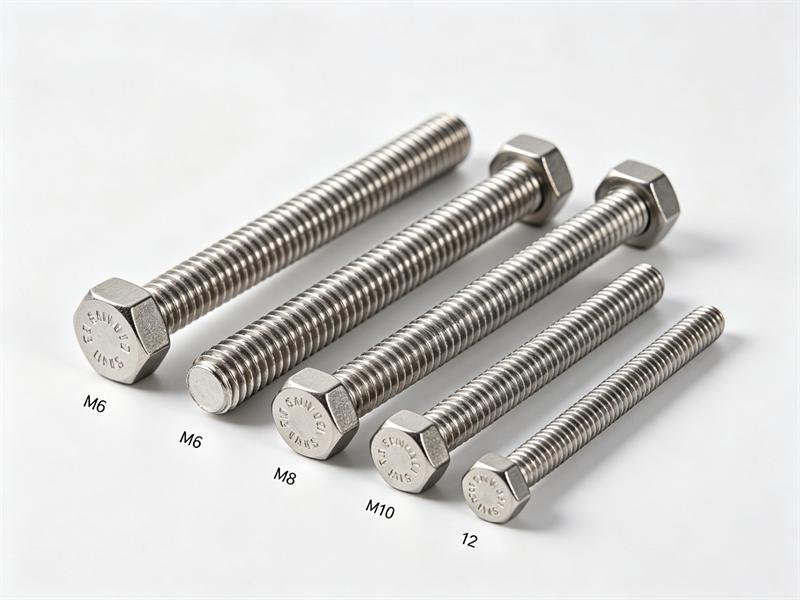
Stainless Steel Hex Bolt
SS304 / SS316 hex bolts, DIN933 / DIN931, M3–M24. A2-70 / A4-70 grades.
View Details →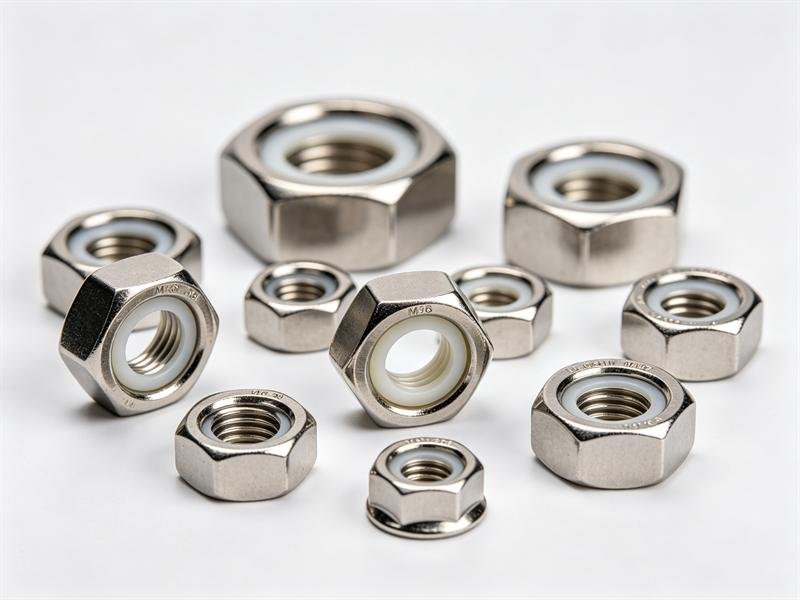
Hex Nuts & Lock Nuts
SS304 / SS316 hex nuts, nylon insert lock nuts, flange nuts. DIN934 / DIN985.
View Details →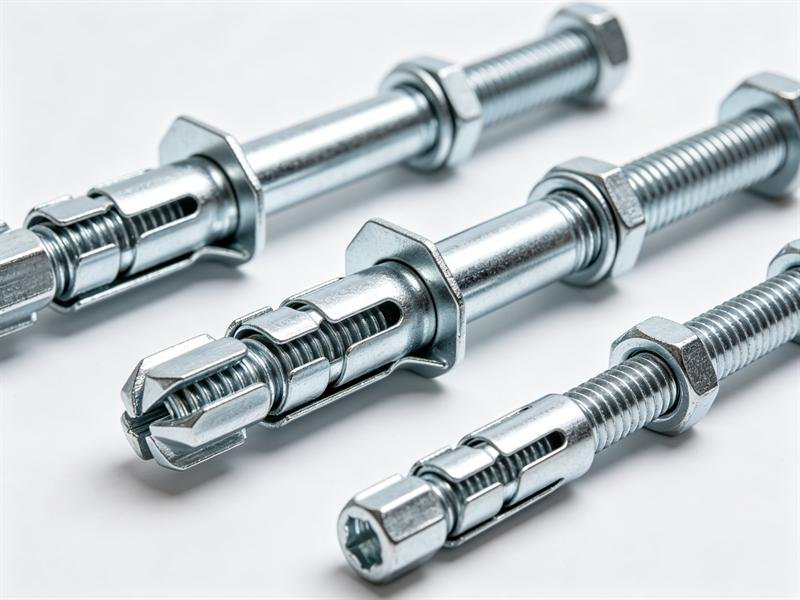
Wedge Anchor Bolt
Concrete wedge anchors in zinc plated and SS304 / SS316 stainless steel. M6–M20.
View Details →Need Help Selecting the Right Grade?
Our engineering team can help you choose between 304 and 316 stainless steel for your specific application. Contact us for a free consultation and quote.
Contact Us for a Quote